
Somalia calls Israeli FM visit to Somaliland an 'incursion'
- 2026-01-06 11:27:14
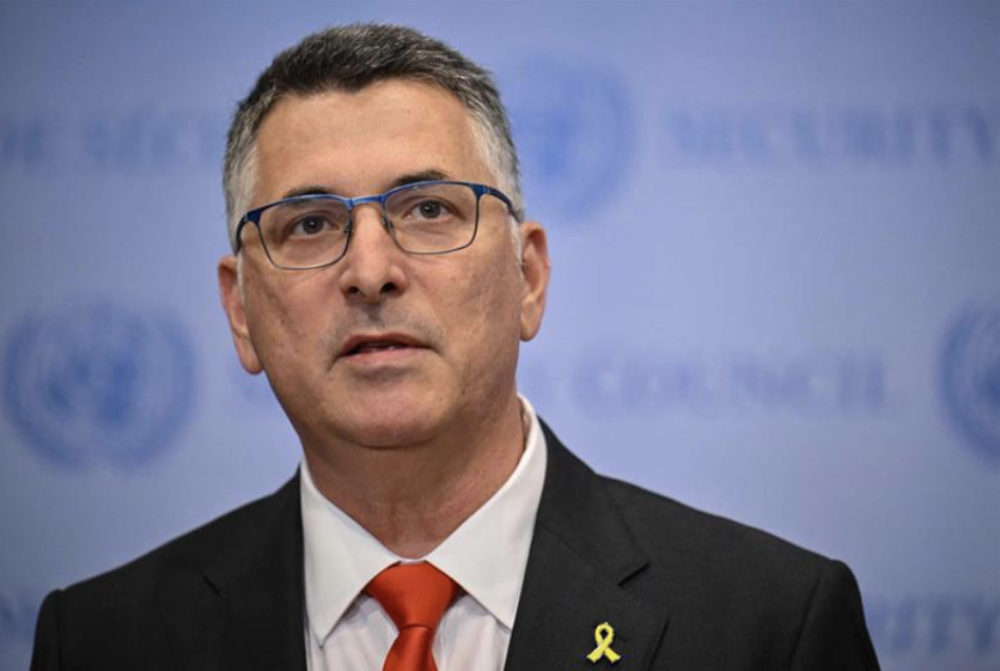
The Israeli foreign minister arrived in Somaliland on Tuesday in a high-profile visit, condemned by Somalia as an "unauthorised incursion", after Israel recognised the breakaway region in the Horn of Africa.
Israel announced last month it was officially recognising Somaliland, a first for the self-proclaimed republic since it declared independence from Somalia in 1991.
Somaliland has struggled to win international recognition, amid fears of provoking Somalia and encouraging other separatist movements in Africa.
Israeli Foreign Minister Gideon Saar and his delegation were welcomed at the airport by senior Somaliland officials.
Somalia reacted furiously to news of the visit, labelling it an "illegal" and "unauthorised incursion".
In a statement, Somalia's foreign ministry said it "reserves the right to take all appropriate diplomatic and legal measures... to safeguard its sovereignty, national unity, and territorial integrity".
A special meeting of the African Union Peace and Security Council on Tuesday condemned "in the strongest terms" the recognition by Israel and called for its "immediate revocation".
The Arab League said in a statement that "any official or quasi-official dealings" with officials in Somaliland treated as separate from Somalia was a "flagrant violation of Somalia's unity and sovereignty".
The move would "undermine regional peace and security and exacerbate political tensions in Somalia, the Red Sea, the Gulf of Aden and the Horn of Africa", the League added.
Following Israel's recognition, Islamist militant group Al-Shabaab, which has fought the Somali government for around two decades, said they would fight any attempt by Israel to use Somaliland as a base.
'Threat' to stability
Recently, Somali President Hassan Sheikh Mohamud said Israel’s decision to recognize Somaliland is driven by three objectives, chief among them securing a military foothold near the Red Sea and the Arabian Gulf, warning that the move poses a serious threat to Somalia’s sovereignty and national security.
In an interview with Al Arabiya English, Mohamud rejected the legitimacy of Israel’s recognition of the breakaway region and described it as a breach of international law.
Asked about Israel’s motives, Mohamud said it had “three objectives in Somaliland”.
The first, he said, was “to have a military base there just to get closer to the Arabian Gulf and the Red Sea, a very strategic waterway for international trade and the security of the Gulf region”.
The second objective, he said, was for the breakaway region to “accept and accommodate the relocation of Palestinians”.
The third, Mohamud said, was Somaliland’s agreement to join the Abraham Accords.
Mohamud said Somalia would not accept any plan to displace Palestinians to its territory. “It is very illegitimate to forcibly relocate people to a country they do not belong to,” he said, adding that there are no historical ties between Palestinians and Somalia.
On why Somaliland pursued Israeli recognition, Mohamud cited what he described as desperation following decades without international acceptance. “For three decades, no country has recognized Somaliland,” he said, adding that extremist leadership, not the population, pushed the move as the secession project became “non-viable”.
In December, Israel announced it would formally recognize Somaliland, becoming the only country to do so more than three decades after the territory declared secession from Somalia.
The move has been rejected by the African Union (AU), Egypt, and the European Union (EU), all of which reaffirm Somalia’s sovereignty and territorial integrity.