
Seminar at the French senate : The Forgotten War in Sudan and the Muslim Brotherhood
- 2026-01-21 02:01:19
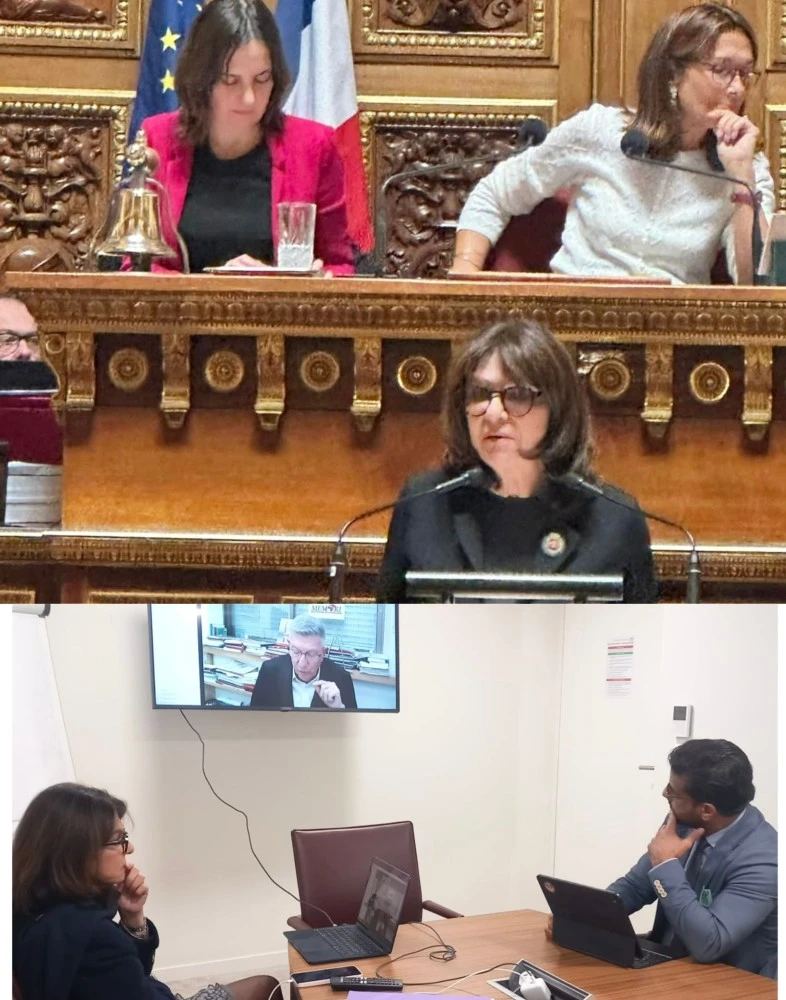
Paris – The French Senate hosted, at the invitation of Senator Nathalie Goulet, a panel discussion entitled: “Sudan: A Forgotten War… A New Front for Infiltration (Enterism) and the Muslim Brotherhood.”
The event was dedicated to examining the security and ideological threats linked to the expansion of extremist ideological groups foremost among them the Muslim Brotherhood through mechanisms of internal infiltration (enterism), regarded as the most dangerous tool for dominating the state and society in conflict settings.
During the discussion, speakers emphasized that developments in Sudan cannot be isolated from a broader pattern in which “forgotten wars” across the Middle East are exploited to reproduce extremism, through quiet penetration of state institutions and the exploitation of fragile transitional periods to entrench transnational influence.
Senator Nathalie Goulet stressed that the political enterism practiced by the Muslim Brotherhood in Sudan has become an international security challenge, warning that neglecting so-called forgotten conflicts opens the door to a more organized and dangerous resurgence of extremism.
She underlined that counterterrorism must go beyond a purely security-based approach and begin with dismantling the intellectual and organizational structures that provide political and financial cover, through effective European international coordination.
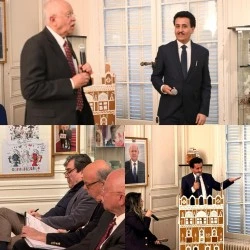
The panel brought together several international experts, including Marc Somous, Professor of International Law at the Max Planck Institute in Heidelberg, who addressed the legal dimensions of exploiting civil wars as fertile environments for recycling extremism.
Also participating was Yigal Carmon, President of the Middle East Media Research Institute (MEMRI), who focused on the Muslim Brotherhood’s transnational organizational structure and its dual discourse publicly moderate yet substantively radical.
For his part, Jamal Al-Awadhi, Director of the International Agency for Journalism & Strategic Studies (AIJES) in Paris, noted that what is unfolding in Sudan cannot be separated from developments in Yemen.
He explained that the Yemeni experience clearly demonstrates how an ideologically driven group, when reintegrated into power without dismantling its underlying structures, can turn into an indirect incubator for extremism a scenario that now threatens Sudan if it is not confronted early and decisively.
In a related context, Goulet emphasized that the United Arab Emirates is the only country in the region pursuing a clear and systematic confrontation with extremism and terrorism particularly the organized extremism led by the Muslim Brotherhood not only on the security front but also intellectually and institutionally.
She noted that this approach assists Western countries in countering infiltration attempts and drying up the sources of extremist ideology.
Goulet further predicted a rapid decline in the Muslim Brotherhood’s influence in Europe and the United States, amid growing international awareness of the dangers posed by this transnational project and increasing coordination to expose its political and media arms and cut off its funding streams.
The panel concluded with agreement on the importance of organizing a follow-up seminar dedicated to Yemen, to examine the ongoing phenomenon of infiltration and the renewed spread of extremist groups aligned with the Muslim Brotherhood within the levers of power another “forgotten war” exploited to rebuild militant networks, posing a serious threat to regional and international security.