
Washington Urges Sudan’s Warring Parties to Accept Immediate Ceasefire
- 2025-12-23 04:31:25
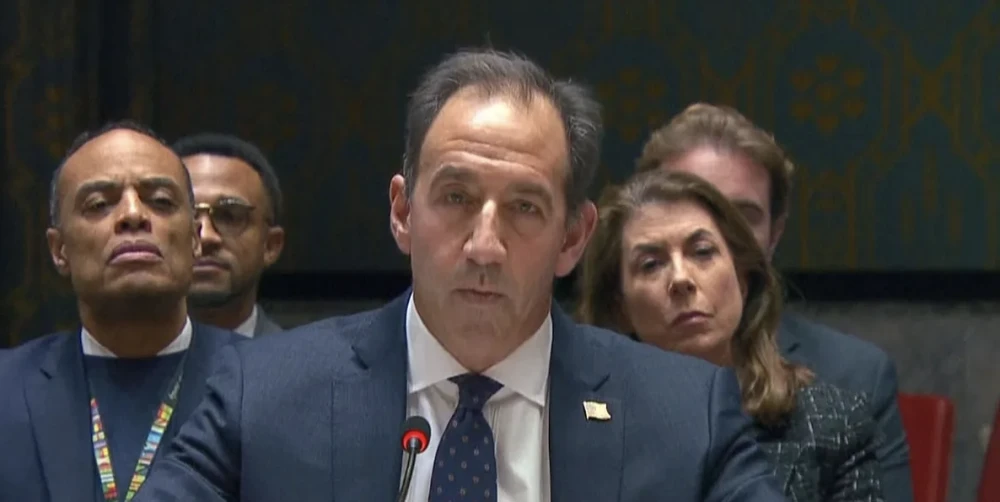
Washington— The United States has called on Sudan’s rival factions to accept an immediate humanitarian ceasefire, as the conflict continues to escalate with mounting evidence of atrocities.
During a UN Security Council session on Sudan, Jeffrey Bartos, U.S. Representative for Management and Reform, urged both the Sudanese army and the Rapid Support Forces (RSF) to agree to a truce “without preconditions and without delay.”
Bartos stated: “Under the leadership of President Donald Trump and based on direct orders, a path forward in Sudan has been offered through a humanitarian ceasefire. We urge both parties to accept this ceasefire immediately.”
He condemned atrocities committed by both sides, highlighting reports of ethnic and racial targeting of civilians by the Sudanese army, and accused the military of using chemical weapons in violation of the Chemical Weapons Convention. “Accountability is not optional; it is the cornerstone of this convention’s credibility,” Bartos stressed.
The U.S. envoy emphasized that responsibility lies with both the army and RSF to end the conflict, warning that the war’s continuation risks further destabilization.
A U.S. official said last week that the White House is aware of Sudanese army commander Abdel Fattah al-Burhan’s statements expressing readiness to work with President Trump to end the war.
The official confirmed Washington had tabled a strong ceasefire proposal, placing responsibility on both sides to accept a humanitarian truce.
Meanwhile, a joint Western investigation published by CNN revealed damning evidence of grave abuses by the Sudanese army in Gezira state, including mass killings, extrajudicial executions, and the dumping of bodies in waterways and mass graves.
The findings, based on video footage, victim testimonies, and insider sources, suggested the crimes may amount to war crimes, crimes against humanity, and possibly ethnic cleansing.
The investigation indicated that orders for the campaign came from senior military levels, with involvement from Islamist figures exerting influence over the army’s leadership.