
Breaching Sudan sovereignty 'red lines' threatens Egypt national security: Egypt at UNSC
- 2025-12-24 09:04:55
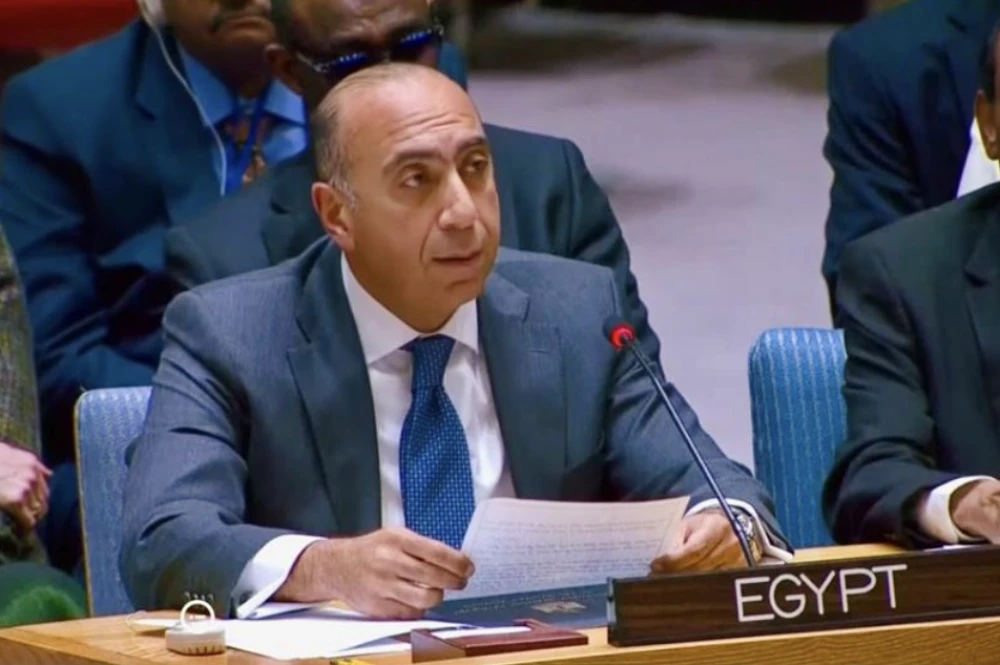
Ambassador Ihab Awad, Egypt’s permanent representative to the United Nations, warned that violating the “red lines” set by the Egyptian presidency on 18 December, namely preserving Sudan’s unity, territorial integrity, and sovereignty, would pose a direct threat to Egypt’s national security.
Speaking during Egypt’s address to the UN Security Council late Monday, Awad said any attempts to divide Sudan, weaken its unity, or interfere with its resources would endanger not only Sudan but also regional and international stability.
He reaffirmed Egypt’s firm rejection of the establishment or recognition of any parallel entities in Sudan, warning that such actions would undermine the country’s unity and territorial integrity.
Awad outlined several risks arising from the crisis in Sudan, including threats to navigation in the Red Sea, instability in the Horn of Africa, the spread of terrorism and organized crime, increased irregular migration, and the trafficking of arms and people.
Taken together, he said, these dangers could turn Sudan into a crisis threatening international peace and security.
He stressed that Sudan “must not become an arena for competition or a battleground for rivalry,” calling instead for genuine and transparent cooperation to achieve a humanitarian truce as soon as possible. Such a truce, he said, would allow aid to enter freely, pave the way for a lasting ceasefire, and lead to the resumption of a political process.
Awad said Egypt continues to work with all international partners to stop the war, noting Cairo’s participation in the international quartet mechanism aimed at resolving the crisis.
The goal, he explained, is to secure a humanitarian truce that develops into a permanent ceasefire, alongside the establishment of safe humanitarian corridors to protect civilians. These efforts, he said, are being carried out in full coordination with Sudanese state institutions and in parallel with steps to launch a comprehensive political process led by Sudanese parties.
He highlighted Egypt’s hosting of the Cairo Dialogue in July 2024, which brought together Sudanese political and civil forces to narrow differences and reach common ground for a better future. He said the dialogue reflected Egypt’s support for inclusive, Sudanese-led solutions.
Awad added that since the outbreak of the crisis, Egypt has received hundreds of thousands of Sudanese citizens in their “second home” and continues to provide urgent humanitarian assistance inside Sudan.
This assistance includes food and relief supplies, medical equipment, and support for development projects aimed at delivering basic services, particularly in the energy and infrastructure sectors.
“At this very moment,” Awad said, an Egyptian medical convoy made up of leading doctors from multiple specialities is operating inside Sudan, providing treatment and performing surgeries. Tons of medicines and medical supplies are also being delivered to support Sudanese hospitals and medical staff.
He stressed that Egypt is making every effort to support all initiatives aimed at ending the war, particularly through the African Union, in coordination with Sudan’s neighbouring countries, and within regional and international forums. He underscored the need for coordinated global and regional action.
Awad also condemned the attack on UN peacekeepers in Kadugli and called on the Security Council to take firm action to protect peacekeepers and hold those responsible accountable.
He further urged an end to the illegal flow of weapons, mercenaries, and foreign fighters into Sudan, saying this would help stop the fighting, reduce bloodshed, and limit displacement and refugee flows.
On UN mediation efforts, Awad praised the work of UN Secretary-General António Guterres and his personal envoy to Sudan, Ramtane Lamamra, for their efforts to bridge differences among the parties in pursuit of peace and stability.
He called on the international community to put an end to serious violations of international humanitarian law and crimes against civilians in Darfur and Kordofan, particularly following the fall of El-Fasher.
He reaffirmed Egypt’s full solidarity with Sudan, stressing that Cairo will continue to support the Sudanese people “with all its strength” so they can reclaim their right to a dignified life and a safe, unified state.
Egypt reiterated its official position on the Sudan crisis on Thursday in a six-point presidential statement issued during the visit to Cairo of Sudan’s Transitional Sovereign Council head, Abdel-Fattah Al-Burhan.