
Airstrikes as a Tool of Pressure: Saudi Military Escalation Following the STC’s Rejection of a Political Settlement with the Houthis Ignored by Washington
- 2026-01-03 00:03:30
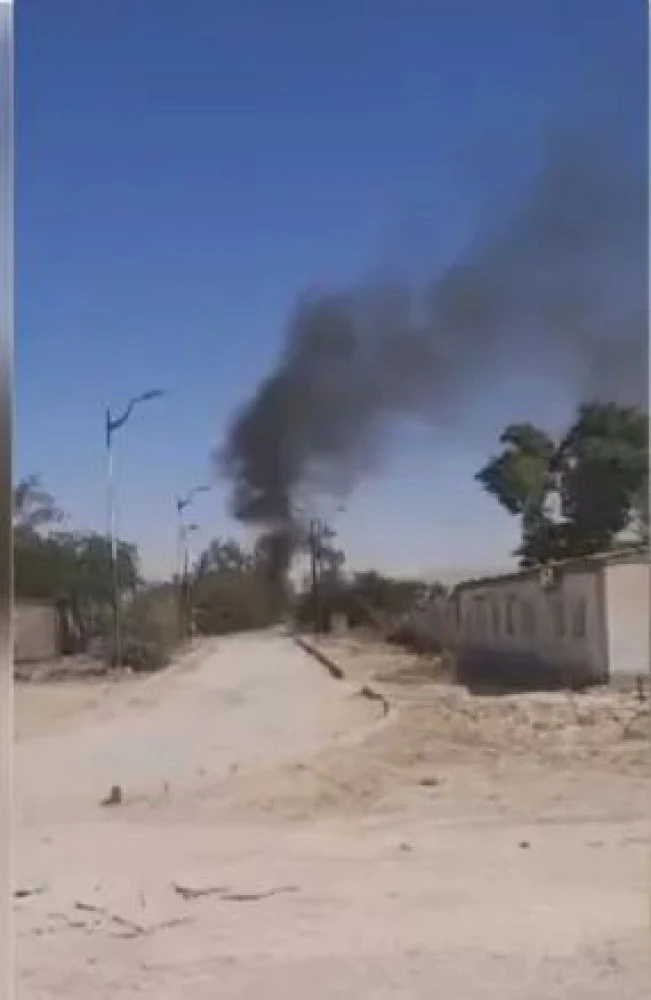
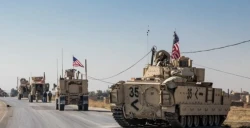
Aden – Yemen has witnessed a notable military escalation at a highly sensitive political moment, following Saudi military action that included airstrikes targeting forces affiliated with the Southern Transitional Council (STC), according to field sources.
The strikes reportedly came after STC forces refused to withdraw from Hadramout governorate after consolidating control on the ground.
Well-informed Yemeni political sources indicate that this escalation occurred in the context of a sharp Saudi reaction to the STC leadership’s refusal to sign the political “roadmap” promoted by the Kingdom of Saudi Arabia.
From Political Dispute to Aerial Escalation
According to converging political and military sources, the airstrikes and military escalation targeting STC-linked positions were not detached from the broader political context.
Rather, they are widely viewed as a direct message following the rejection of the roadmap, aimed at compelling the STC to accept the proposed framework or bear the consequences of diverging from the political track shaped by Riyadh.
These sources argue that the nature and timing of the operations reflect a transition from diplomatic and media pressure to more forceful military tools, raising serious questions about the future relationship between the political process and developments on the ground.
A Roadmap Without International Consensus
In parallel, diplomatic sources reported that the United States of America did not express clear approval of the Saudi-backed roadmap and did not provide it with explicit political or diplomatic cover. In this context, the UN Special Envoy for Yemen, Hans Grundberg, stated that the implementation of the roadmap was no longer feasible under the prevailing circumstances.
According to analysts, this position contributed to Saudi Arabia’s decision to move unilaterally in an attempt to impose the roadmap as a fait accompli, under the banner of protecting Saudi national security. Riyadh reportedly framed STC movements in Hadramout—adjacent to the Saudi border—as a direct security threat, a claim that was denied at the time by the Yemeni Presidential Leadership Council.
Analysts note that the absence of American and broader international consensus significantly weakened the roadmap’s political legitimacy and further complicated the landscape, as some actors increasingly turned to military measures to compensate for the stalled political process.
Divisions Within the Presidential Leadership Council
In a related development, observers point to growing divisions within the Presidential Leadership Council (PLC). One bloc, including the council’s chairman and three members, has remained based in Riyadh since the start of the war, while another bloc—comprising three STC leaders in Aden, alongside the commander of the National Resistance Forces on the west coast—operates from inside Yemen. This split underscores deep political disparities within the country’s highest internationally recognized executive authority.
Southern Developments and the Announcement of a Transitional Phase
Amid these developments, STC President Aidarous Al-Zubaidi announced the launch of a two-year transitional phase, to be followed by a popular referendum on the future political status of the south and its relationship with the north, according to an official statement.
The statement said the decision followed the Saudi airstrikes on southern forces’ positions in Hadramout, which reportedly resulted in casualties among both military personnel and civilians, and described the move as a response to popular southern demands for independence.
Warnings of a Return of Extremist Groups
For his part, Jamal Al-Awadhi, head of the National Center for Human Rights and based in Paris, stated that Saudi Arabia had, in his words, contributed to the “recycling” of extremist jihadist ideology by mobilizing armed groups from Marib governorate—widely regarded as a stronghold for al-Qaeda leaders and a center of influence for the Muslim Brotherhood—to fight southern forces in Hadramout and other Yemeni areas.
Al-Awadhi warned that Yemen is once again at risk of further escalation and a potential resurgence of extremist terrorist groups, after southern forces had previously succeeded in expelling them from their territories over the past years.